
TL;DR: Brake pads wear out. It’s not if, it’s when. Squealing, grinding, spongy pedals, or a brake light? Time to book an inspection. Diesel truck owners in Okotoks face heavier wear from weight, towing, and our local driving conditions. Don’t wait for metal-on-metal contact—that turns a $300 pad replacement into a $1,200 rotor job.
Your brakes are the one thing you can’t afford to ignore. In Okotoks, where Highway 2 commutes, gravel ranch roads, and winter conditions are part of daily life, knowing when your brake pads need replacing isn’t just smart—it’s essential.
Brake pads are designed to wear down. They sacrifice themselves through friction and heat every time you slow down or stop. For diesel truck owners—especially those towing equipment, hauling loads, or navigating the Foothills—that wear happens faster.
This guide covers everything you need to know about brake pad replacement Okotoks: the warning signs, what makes diesel trucks different, how local driving conditions affect your brakes, and what to expect during professional service.
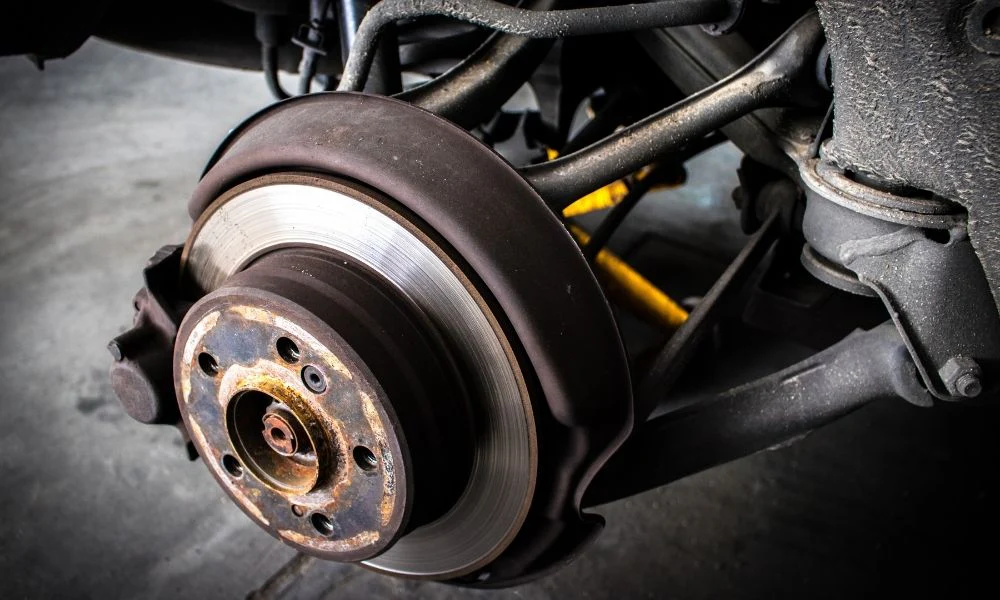
5 Signs Your Brake Pads Need Replacement Now
Most vehicles give you clear warnings when brake pads are nearing the end of their life. Here’s your checklist:
☐ Squealing or squeaking when you brake — Most pads have a metal wear indicator that scrapes the rotor when material gets too thin. That high-pitched squeal is your first alert.
☐ Grinding noise (metal-on-metal contact) — This means the friction material is completely gone. The backing plate is now destroying your rotors. This is an emergency.
☐ Brake pedal feels spongy or sinks lower — Reduced responsiveness or a pedal that goes closer to the floor means the pads are worn or glazed.
☐ Steering wheel vibrates when braking — Usually indicates warped or unevenly worn rotors, often a secondary effect of neglected pads.
☐ Brake warning light is on — Modern vehicles have electronic sensors that trigger a dashboard light when pads wear below a safe threshold.
If you’re hearing grinding, your vehicle is unsafe to drive. Book a tow to prevent total brake failure.
Why Diesel Trucks Need Different Brake Care
Diesel trucks put far more stress on braking systems than passenger cars. If you drive a Silverado 2500, Ram 3500, or F-250 in Okotoks, here’s what you’re up against:
Heavier Weight = Faster Wear
A diesel truck weighs 7,000 to 10,000+ pounds empty. Add a loaded trailer, tools, or equipment, and you’re easily exceeding 15,000 pounds. That weight transfers directly to your brake pads. Every time you slow down on Highway 2A or descend into the Sheep River Valley, your brakes work harder than a sedan’s ever will.
Towing Puts Extreme Demand on Brakes
Towing a fifth-wheel, flatbed trailer, or livestock hauler amplifies brake load. A hard stop with 12,000 pounds behind you generates massive heat. If your pads are marginal, that heat can glaze the friction material, reducing stopping power when you need it most.
Engine Braking Isn’t a Substitute
Diesel engines provide excellent engine braking (compression braking), which helps on long descents. But engine braking alone won’t prevent pad wear. You still rely on your friction brakes for stops, and many drivers mistakenly think engine braking eliminates the need for brake maintenance. It doesn’t.
The Bottom Line for Diesel Owners
If you use your truck for work—ranching, contracting, or hauling in the Foothills—plan on more frequent brake inspections than the average car owner. Diesel brake repair in Okotoks isn’t optional maintenance; it’s a safety requirement.
How Okotoks Driving Conditions Affect Your Brakes
Local context matters. Here’s what accelerates brake wear in the Okotoks area:
Gravel Roads and Dust
Rural roads and ranch access routes kick up dust and debris. Fine particles work their way into caliper mechanisms, causing pads to drag or wear unevenly. Regular cleaning during brake inspections prevents this.
Winter Salt and Corrosion
Road salt is essential for winter safety, but it’s brutal on brake components. Salt corrodes calliper slide pins, preventing pads from retracting fully after braking. That causes constant contact with the rotor, drastically shortening pad life. A diesel truck brake repair shop in Okotoks should clean and lubricate slide pins as part of every service.
Highway 2 and 2A Commuting
High-speed highway driving is actually easier on brakes than city stop-and-go traffic. But sudden slowdowns—common during rush hour or when traffic backs up near the Co-op or Costco—generate heat spikes that stress pads.
Foothills Terrain
If you drive west into the Rockies or navigate hilly ranch roads, you’re riding your brakes more than drivers on flat prairie highways. Descending grades with a loaded diesel truck generates serious heat, especially if you’re not using engine braking effectively.
When to Inspect vs. When to Replace
Not every brake issue requires immediate replacement, but you need to know the difference.
Get a Brake Inspection If:
- You hear occasional squeaking (not constant grinding)
- It’s been 40,000 km or more since your last check
- You’re planning a long road trip or heavy towing
- You’ve recently driven through deep water or heavy mud
A truck brake service in Okotoks typically includes a visual inspection of pad thickness, rotor condition, brake fluid level, and calliper operation. Most shops charge nothing or a minimal fee if you’re already in for another service.
Replace Immediately If:
- Grinding noise when braking
- Brake warning light stays on
- Stopping distance has noticeably increased
- Pedal goes to the floor or feels spongy
- You smell burning from the brakes during normal driving
Waiting on any of these symptoms will cost you. Worn pads destroy rotors, and rotors are significantly more expensive than pads.
Understanding Brake Pads and How They Work
Brake pads are consumable parts. Modern disc brake systems work by clamping a pad (mounted in a calliper) against a spinning rotor. The friction between the pad material and the metal rotor converts your truck’s kinetic energy into heat, slowing the wheels.
The friction material on the pad is designed to wear away gradually, protecting the more expensive metal components (rotors and callipers). When the pad material is gone, metal grinds on metal—and that’s when serious damage happens.
Types of Brake Pads for Diesel Trucks
Not all pads are created equal. For Okotoks diesel truck owners, choosing the right compound matters:
Semi-Metallic Pads (Recommended for Diesel Trucks)
Contains 30% to 70% metal (steel, copper, iron). These pads handle heat exceptionally well and provide strong, consistent stopping power under heavy loads. They’re the best choice for towing and work trucks. The trade-off: slightly more noise and brake dust than ceramic pads.
Ceramic Pads (Good for Daily Drivers)
Made from dense ceramic fibres with minimal metal content. Quiet, low dust, and long-lasting. Great for light-duty trucks used for commuting, but not ideal for heavy towing or frequent hauling.
Organic Pads (Not Recommended for Diesel Trucks)
A softer material that wears quickly under high heat. Fine for compact cars, but inadequate for diesel truck demands.
When you book diesel brake service in Okotoks, ask what compound they use. Quality matters—cheap pads wear fast and perform poorly under load.
How Often Should Brake Pad Replacement Okotoks Be Done?
The average range is 50,000 to 70,000 km, but diesel trucks often fall on the lower end—especially if you tow regularly or drive in the conditions described above.
Factors that shorten pad life in Okotoks diesel trucks:
- Heavy loads and towing (accelerates wear by 30-50%)
- Stop-and-go driving (town traffic vs. highway cruising)
- Winter driving (salt, moisture, freeze-thaw cycles)
- Aggressive braking habits (late, hard stops generate more heat)
Your owner’s manual provides a baseline, but it’s generic. A trusted mechanic’s visual inspection during an oil change is far more accurate than a mileage estimate.
The Brake Pad Replacement Process Explained
Professional brake service is more than just swapping pads. Here’s what should happen during a proper diesel truck brake repair in Okotoks:
Step 1: Full System Inspection
The technician checks pad thickness, rotor condition, calliper function, brake hoses, and fluid quality. This catches problems before they become dangerous.
Step 2: Remove Old Pads
The calliper is retracted, and the worn pads are removed. This is also when the tech assesses whether the rotors can be resurfaced or need replacement.
Step 3: Clean and Prep
Critical step: the hub surface must be cleaned of rust and debris so the rotor sits perfectly flat. Skipping this causes vibration and premature wear.
Step 4: Resurface or Replace Rotors
Installing new pads on grooved, worn rotors is a waste of money. The pads won’t bed in properly and will wear out fast. Rotors should be machined (resurfaced) or replaced.
Step 5: Lubricate Moving Parts
Calliper slide pins and contact points are coated with high-temperature brake grease. This ensures smooth calliper movement and even pad wear.
Step 6: Install New Pads and Road Test
New pads are installed, the system is reassembled, and the truck is road-tested to bed in the brakes properly.
DIY vs. Professional Service
Many modern diesel trucks have Electronic Parking Brakes (EPB), which require a diagnostic computer to retract the rear callipers. Forcing them back manually destroys the electronic actuator—a $600+ mistake.
Professional shops also provide warranties on parts and labour. If a DIY job fails, you’re liable for the repair and any safety consequences.
For diesel truck brake repair in Okotoks, the smart move is a shop with diesel experience, proper tooling, and a warranty.
Why Timely Brake Pad Replacement Matters
Safety First
Worn pads increase stopping distances. In an emergency—a deer on a rural road, black ice on Highway 2A, or sudden traffic on Main Street—those extra few metres can mean the difference between a close call and a collision.
Prevent Costly Repairs
Brake pads are designed to be sacrificial. They wear down, so your rotors don’t. If you ignore worn pads and let metal grind on metal, you’ll destroy the rotors. That turns a $300 pad replacement into a $1,200+ rotor replacement.
Protect Your Investment
A well-documented service history—including brake maintenance—boosts resale value. Conversely, being involved in an at-fault accident due to neglected brakes has serious insurance and legal consequences.
Choosing a Brake Service Provider in Okotoks
Not all shops are equal. Here’s what to look for when booking diesel brake repair in Okotoks:
Transparency and Communication
Do they provide written estimates before starting work? Do they text or email photos of the worn parts so you can see exactly what needs replacing?
Quality Parts
Ask what brand and grade of pads they use. Avoid shops that default to “white box” economy parts unless you specifically request budget options. Quality brands (Akebono, Bosch, Wagner, Brembo) perform better and last longer.
Warranty
A reputable shop stands behind its work. Look for at least 12 months / 20,000 km of parts and labour coverage.
Diesel Truck Experience
Not all shops understand the demands of diesel trucks. Ask if they regularly service Duramax, Power Stroke, and Cummins diesel engines. Shops that specialize in diesel work understand the heat and load factors that affect brake performance.
Fast Farm’s Approach to Diesel Truck Brake Service
At Fast Farm, we understand that Okotoks diesel truck owners rely on their vehicles for work, not just transportation. Our approach to brake service goes beyond the basics.
We use high-quality brake components that meet or exceed OEM specifications, specifically chosen for diesel truck demands. Our technicians are trained in diesel brake systems and understand the unique stressors Foothills County drivers face—towing heavy loads, navigating gravel roads, and dealing with winter corrosion.
We don’t just swap pads. We inspect your callipers, clean and lubricate slide pins, check brake fluid condition, and assess rotor health. We believe in showing you the wear patterns and explaining your options, so you can make informed decisions without pressure.
Whether you drive a Duramax Silverado, a Power Stroke F-250, or a Cummins Ram, Fast Farm provides dealership-level diesel expertise with the personal care of a local Okotoks shop. We’ve built our reputation serving work trucks, ranch vehicles, and towing rigs in the Foothills—because we know what these trucks go through.
Learn more about our brake services or schedule a brake inspection today.
Brake Pad Replacement Okotoks FAQs
Can I drive with worn brake pads?
Not safely. If you hear squealing, you have a narrow window to get to the shop. If you hear grinding, the vehicle is unsafe and should be towed. Driving on metal-on-metal contact risks total brake failure.
How long does brake pad replacement take?
A standard pad replacement (front or rear axle) takes 1 to 2 hours. If the rotors need machining or replacement, expect a 2- to 3-hour turnaround. Diesel trucks with electronic parking brakes may take slightly longer due to the diagnostic tools required.
How much does diesel brake repair cost in Okotoks?
Costs vary by truck make and model. Replacing pads on one axle typically ranges from $300 to $500. If rotors are included, expect $600 to $900. For an accurate quote, call with your VIN and describe the symptoms.
Are aftermarket pads as good as OEM?
Yes—high-quality aftermarket brands (Akebono, Bosch, Wagner, Brembo) often match or exceed OEM performance. However, cheap “economy” pads should be avoided. They wear quickly, produce excessive dust, and can be noisy.
How often do brake pads need replacing on a diesel truck?
For diesel trucks used for towing or hauling in Okotoks, expect to replace the pads every 40,000 to 60,000 km. Light-duty diesel trucks used primarily for commuting may reach 70,000 km. Winter driving and gravel roads accelerate wear.
Should I replace all four brake pads at once?
Not necessarily. Front brakes wear faster than rear brakes (usually 60/40 split). Most shops replace front and rear pads independently as needed. However, if your truck is used for heavy towing, replacing all four at once can provide more balanced braking performance.
Schedule Your Brake Inspection in Okotoks
Brake pad replacement Okotoks is fundamental to vehicle safety, especially for diesel truck owners in Okotoks. The combination of heavy loads, winter conditions, gravel roads, and Foothills terrain accelerates wear beyond what typical maintenance schedules assume.
By staying alert to warning signs—squealing, grinding, spongy pedals, or dashboard lights—and understanding the local factors that affect brake life, you can address issues before they become dangerous or expensive.
Don’t wait for the grinding noise. Proactive maintenance is the key to vehicle longevity, safety, and peace of mind.
Ready to ensure your diesel truck is safe for the road? Schedule a comprehensive brake inspection with Fast Farm today. Our team provides honest assessments and top-tier diesel truck brake service in Okotoks.
Contact Fast Farm and book your brake inspection online